
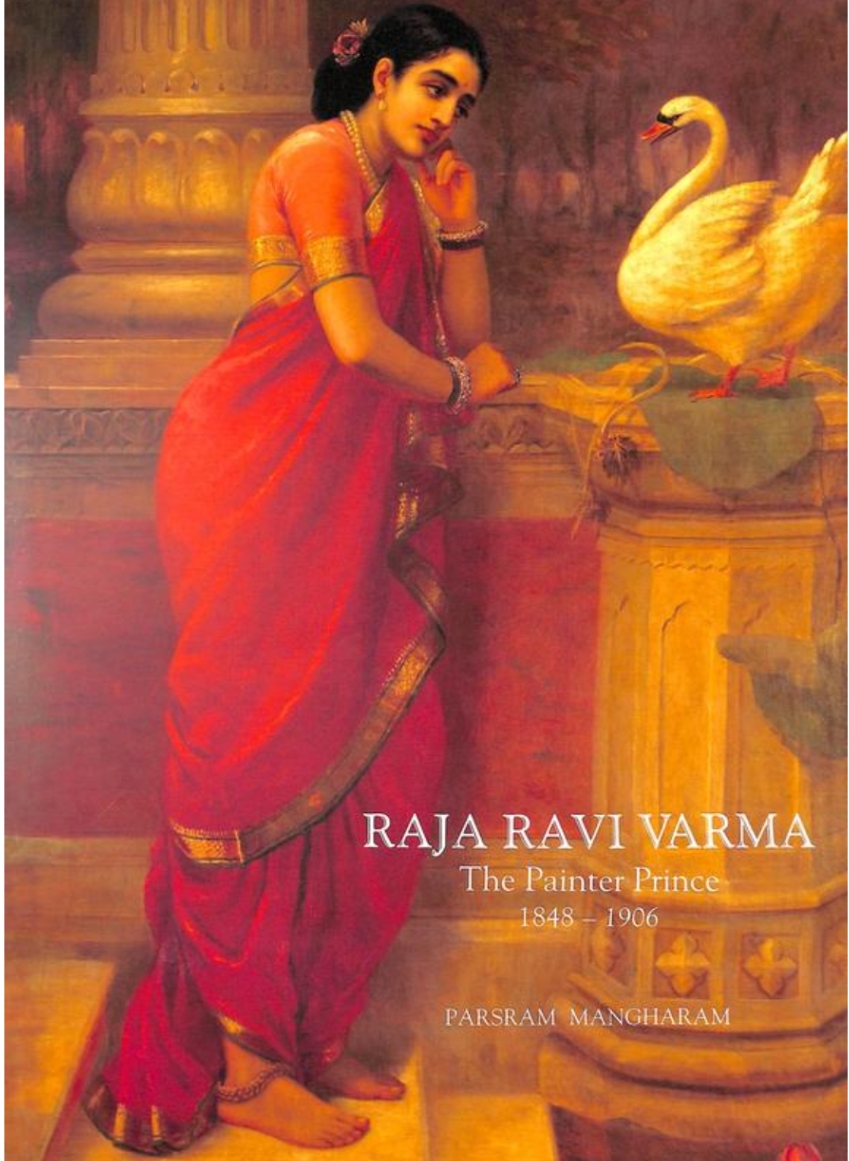
RAJA RAVI VARMA The Painter Prince 1848 - 1906 Classic Volume HB.
From the foreword by Dr. Karan Singh: Painting in India has a long and distinguished tradition going all the way back to the frescos in the Ajanta and Ellora caves many centuries ago. In the middle of the 19 century, as part of the Indian renaissance, there was an efflorescence of artistic talent in various parts of India. The Bengali and Baroda schools later became the best known, but down in the South the work of Raja Ravi Varma (1848-1906) created artistic history. His depiction of Indian themes, including devotional and mythological figures, created a great sensation at that time. It is recorded that when his paintings were exhibited in Mumbai, vast crowds of people gathered to see the paintings and thousands of their photographs were sold all over India.Almost a century has elapsed since the significant contribution made by Raja Ravi Varma (1848-1906), in transforming the sensibility and history of painting in India. Although evaluation of his work remains controversial, he was among the first artists in the 19 century to introduce a radical change: by focusing on themes of Indian mythology and literature. He did this by resurrecting classical Indian sources from the Mahabharata and from Kalidasa's plays, and by combining this with European techniques of realism in colour, composition and perspective.As in the West, and unlike the Indian tradition, he employed models of Nair women from Travancore and Maharashtrian women from Bombay in representing life as he saw or imagined it. In his day he remained unrivalled for his mastery of these contemporary skills, where the sheen of silk saris and lustre of pearl necklaces brought a 'real-life' quality to his portraits .....